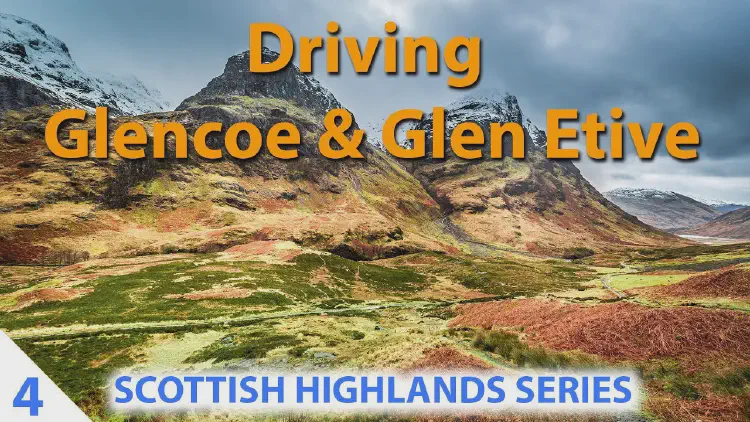
Exploring Glencoe: A Scenic Drive Through Scotland's Majestic Highlands
A breathtaking journey through **Glencoe**, arguably Scotland's most renowned and picturesque glen. This guide follows a scenic drive through...
Scotland is a small country built on extremely old rock. The Caledonian mountains were once Himalayan in scale; what remains is their worn root, scoured by Ice Age glaciers into glens, sea-lochs and a coast so cut and re-cut that no point in the country sits far from saltwater. In the far north-west the bedrock (Lewisian gneiss) is roughly three billion years old, among the oldest exposed surfaces on Earth. Glencoe is the remnant of a 420-million-year-old super-volcano. The Highlands are not merely scenic; they are time, made walkable.
What makes Scotland feel unlike anywhere else, though, is the cultural weight that has stayed attached to the ground. Gaelic is still a working language on Lewis and Harris. The eighteenth- and nineteenth-century Clearances emptied whole glens, and the place-names left behind (every bealach, coire and strath) still map a settlement pattern that’s gone. The Borders carry their own ballad tradition; the Northern Isles their own Norse. Three living memories layered onto the same seventy-eight thousand square kilometres.
Geography compresses that variety into something almost improbable. There are roughly 790 islands; the Outer Hebrides stretch 130 miles across more than a hundred of them. Loch Ness alone holds more freshwater by volume than every lake in England and Wales combined. The Cairngorms form the UK’s only true sub-Arctic plateau, Galloway Forest the UK’s first Gold-Tier International Dark Sky Park, and St Kilda, far out in the Atlantic, the only place in Britain inscribed by UNESCO for both its nature and its abandoned culture. In April 2025 the Isle of Arran joined the North-West Highlands and Shetland to give Scotland three UNESCO Global Geoparks, more than any other UK nation.
Compare like for like and the singularity holds. Norway has fjords without the language. Iceland has fire without the forest. Ireland has the green without the height. Scotland keeps all of it inside a 275-mile drive from the Solway to Cape Wrath, and lets the weather do the rest. Mist comes in off the Atlantic by mid-morning; a Highland glen can move through four seasons before lunch.
What follows is a working map of the country’s natural regions (the Highlands, the islands, the great lochs, the Cairngorms plateau and the gentler Borders) and the posts that go deepest on each.
Three pieces that, between them, span the geography:
The geological and cultural heart: Ben Nevis at 1,345 m, Glencoe’s volcanic ridges, the Great Glen Fault, and the long emptied straths whose Gaelic place-names still hold the map together. Begin with The Highlands.
From the Inner Hebrides to Shetland (closer to Norway than to Edinburgh), Scotland’s islands are a geography of fragmentation: machair wildflower grasslands that exist almost nowhere else on Earth, the Callanish Stones, Neolithic Skara Brae older than the pyramids, and the Up Helly Aa fire festival each January. Dive deeper into Isle of Skye, the Outer Hebrides, and Orkney and Shetland.
Most of the great lochs sit along the Great Glen Fault, a tectonic line that slices Scotland from Fort William to Inverness. Loch Ness is the deepest in the British Isles by volume; Loch Lomond, an hour from Glasgow, is the largest by surface area and where the Highlands begin in earnest. Start with Loch Ness and the Great Glen and Loch Lomond and The Trossachs.
At 4,528 km² (twice the size of the Lake District), the Cairngorms are the UK’s largest national park, holding five of its six highest mountains and Britain’s only herd of free-ranging reindeer. Cairngorms Connect, a 600 km² habitat-restoration project running on a two-hundred-year horizon, is the biggest of its kind in the country. Full guide: Cairngorms National Park.
The gentler counterpart to the Highlands: rolling hills, the Tweed Valley’s salmon water, four twelfth-century abbey ruins (Melrose, Jedburgh, Dryburgh, Kelso) stitched together by the 109-km Borders Abbeys Way, and a ballad tradition shaped by three centuries of cross-border raiding. More in Scottish Borders.
These regions don’t sit in isolation. They are the venue for Scotland’s outdoor activities: climbing Munros, cycling the Hebridean Way across ten islands and six causeways, watching ospreys return to Speyside each spring. They are dotted with the castles and historic sites that anchor Scotland’s national story, from Urquhart on Loch Ness to Eilean Donan in Kintail to Stirling on its volcanic crag. And they connect, by sleeper train and trunk road, to Scotland’s cities: Inverness as the Highland gateway, Glasgow as the launching pad for Loch Lomond and the Trossachs, Edinburgh as the door to the Borders.
If you read only the regional pieces above, you’ll have most of what a first trip to Scotland actually needs.
A breathtaking journey through **Glencoe**, arguably Scotland's most renowned and picturesque glen. This guide follows a scenic drive through...
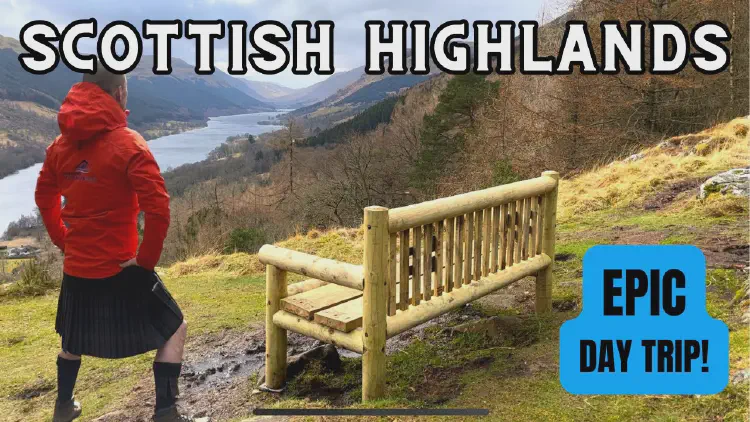
Join us on an unforgettable journey into the heart of Scotland as we explore some of the most breathtaking and myth-laden locations within **Loch Lomond & The...
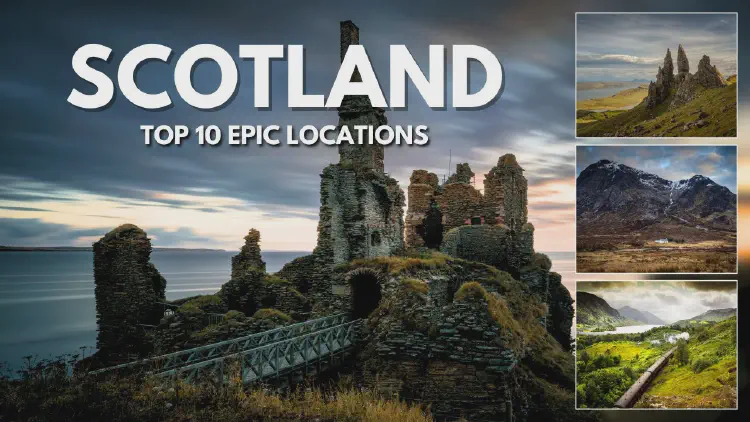
Scotland is a land of breathtaking landscapes, ancient castles, and mystical legends. With thousands of tours under our belt, we at Scotland's Wild have...
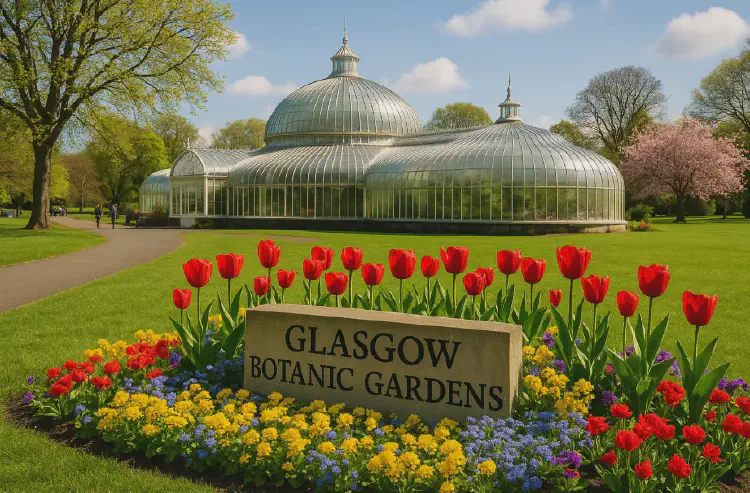
Discover Glasgow Botanic Gardens, a 200-year-old botanical treasure featuring heritage glasshouses, diverse plant collections, and beautiful themed gardens. Your complete guide to visiting this iconic West End attraction.
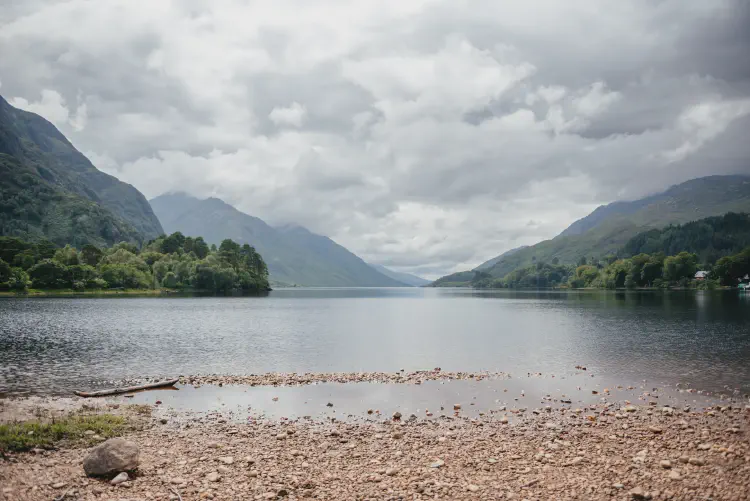
The Scottish Highlands are one of the world’s most breathtaking regions—rugged, remote, and romantic. Known for towering mountains, deep lochs, and windswept glens, the Highlands embody the spirit of wild Scotland.
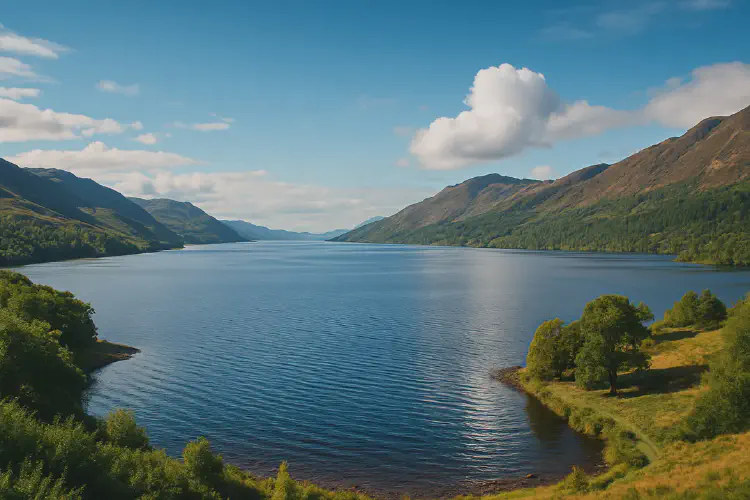
Few places capture the imagination like Loch Ness. Set within the Great Glen, this vast loch combines myth, history, and natural beauty, making it one of Scotland’s most famous destinations.