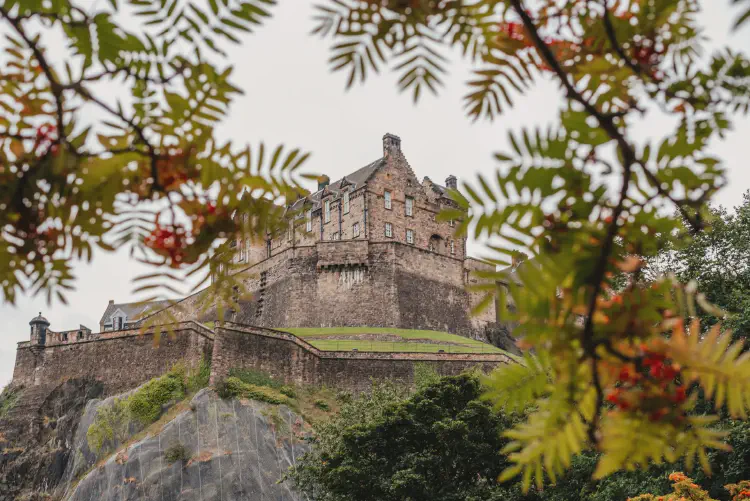
Edinburgh highlights
Edinburgh, Scotland’s capital, is a city where history, culture, and natural beauty meet. Known as the ‘Athens of the North,’ it offers a blend of medieval charm and elegant Georgian architecture.
Scotland’s six main cities are more varied than their number suggests. Two sit 45 minutes apart by rail and together form one of Europe’s most complete urban heritage corridors: Edinburgh, the medieval capital on its volcanic ridge, and Glasgow, the Victorian industrial powerhouse that rebuilt itself around music, museums and architecture. Two sit at the edges of the Highlands: Inverness, the UK’s northernmost city and the gateway to everything north and west of the Great Glen, and Stirling, the small city that stood between the Highlands and Lowlands and became the hinge of Scottish history twice in 17 years. One built its entire identity from granite quarried at its own doorstep: Aberdeen, Scotland’s third city, facing the North Sea between two rivers and surrounded by more than 260 castles. And one transformed its redundant docklands into the UK’s first UNESCO City of Design: Dundee, Scotland’s sunniest city, where the first V&A museum outside London opened in 2018 on a waterfront anchored by a Victorian Antarctic expedition ship.
What makes them work as a network is their scale and their rail connections. Even Glasgow, the largest, has a walkable core. Edinburgh’s Old Town from Castle to Holyrood Palace is exactly one mile. Dundee’s waterfront takes 20 minutes to walk end to end. None of these cities overwhelms you, and the trains between them are among the most practical in Britain. Edinburgh to Glasgow: 45 minutes, trains every 15 minutes. Edinburgh to Stirling: 45 minutes. Glasgow to Stirling: 30 minutes. Edinburgh to Dundee: 1h 20m. Edinburgh to Aberdeen: 2h 30m. Edinburgh to Inverness: 3h 30m. A fortnight using three or four of these cities as base camps is genuinely workable.
Each city also opens onto something non-urban. Glasgow to Loch Lomond is 45 minutes by rail, and the West Highland Way starts at Milngavie on the city’s own northern edge. Edinburgh to the Borders is an hour south; to Fife and St Andrews, 20 minutes across the Forth. Stirling to the Trossachs takes 30 minutes. Inverness is where the North Coast 500 starts and ends. Aberdeen puts over 260 Aberdeenshire castles, Balmoral on Royal Deeside, and the Speyside whisky distilleries within a day’s drive. Dundee is 20 minutes from Perth and 30 from St Andrews.
(Scotland officially has eight cities. Perth, granted city status in 2012, and Dunfermline, Scotland’s newest city (2022) and royal seat for 400 years before Edinburgh, are both day-trippable from the capital. Scone Palace outside Perth was the crowning place of Scottish monarchs for nearly 1,000 years; Dunfermline Abbey holds the tomb of Robert the Bruce. The posts on this site cover the six larger cities above.)
What follows is a city-by-city guide.
Three cities that between them represent the full range:
Edinburgh is built on three volcanic features: Castle Rock (a 340-million-year-old dolerite plug), Arthur’s Seat (the eroded core of an extinct Carboniferous volcano), and Calton Hill. The city that grew across those ridges and plateaux in two distinct phases — a medieval Old Town of tenements and closes stacked up the Castle Rock, and a Georgian New Town of grid streets and elegant squares built downhill from it in the 18th century — was jointly inscribed as a UNESCO World Heritage Site in 1995. No other city in the world has a continuous medieval-to-Georgian built sequence on quite this scale.
The festivals are the other major fact. Each August, the Edinburgh Festival Fringe brings over 3,000 shows to 280+ venues across the city, making it the largest arts festival in the world. The International Festival, the Military Tattoo and the International Book Festival run concurrently, turning the entire city into a performance space for three weeks. In every other month, Edinburgh is a very different place: quieter, cheaper, and easier to actually see.
National Museum of Scotland (free), Scottish National Gallery (free), Holyrood Palace and Holyrood Park (free to enter the park; Arthur’s Seat is a 45-minute walk from the Royal Mile).
Full guide: Edinburgh Highlights.
Glasgow is Scotland’s largest city and one of the most confidently cultural places in Britain. The Victorian city centre (red sandstone, cast-iron, the City Chambers on George Square) and the West End (Charles Rennie Mackintosh’s Art Nouveau, leafy terraces, the University of Glasgow’s Gothic towers) sit alongside a free-museum culture that is exceptional even by Scottish standards. Kelvingrove Art Gallery and Museum (free, over 1.3 million visitors per year, Salvador Dalí’s Christ of Saint John of the Cross on the upper floor), the Burrell Collection (free, 9,000-object bequest by shipping magnate William Burrell, newly renovated), and the Riverside Museum (free) would together constitute a major cultural attraction in any European city. Glasgow Cathedral is the only medieval cathedral on the Scottish mainland to have survived the Reformation intact.
Glasgow became a UNESCO City of Music in 2008, averaging more than 150 live events per week. Celtic Connections in January is Europe’s biggest winter music festival. In summer 2026, Glasgow hosts the Commonwealth Games (23 July–2 August), a scaled-down 10-sport edition centred on four venues within an eight-mile corridor.
Full guide: Glasgow Highlights.
Inverness was granted city status in 2000 as part of the Millennium celebrations, making it one of Scotland’s newer cities despite being the main settlement of the Highlands for centuries. Its population is around 61,000 — smaller than many English market towns — which makes the word “city” feel slightly formal. What it actually is is an excellent base.
Within an hour from the centre in different directions: Loch Ness and Urquhart Castle to the south, Culloden Battlefield to the east, the Black Isle to the north, and the start of the NC500 coastal route (516 miles, returning to Inverness) to the west. Speyside whisky distilleries (Glenmorangie, Balblair, Clynelish) are within 45 minutes. The Caledonian Sleeper overnight service connects Inverness directly to London Euston, which makes arriving by sleeper and waking up in the Highlands a genuinely practical option.
The city itself has a River Ness walk, the Ness Islands connected by footbridges, Inverness Museum and Art Gallery (Pictish stones, Jacobite artifacts — free), and the Victorian sandstone castle on its hill. It is not a destination city. It is a very good platform for everything around it.
Full guide: Inverness and the Highlands Gateway.
Stirling is the smallest city on this list and the one with the strongest claim to having shaped Scottish history. The crossing of the River Forth here was the only practical land route between the Highlands and the Lowlands, which is why Wallace and Moray chose it for Stirling Bridge (1297) and why Robert the Bruce chose the ground two miles south for Bannockburn (1314). The volcanic crag on which Stirling Castle stands overlooked both battles. The castle’s Royal Palace (1538–42) is considered the earliest example of Renaissance royal architecture in Britain: earlier than anything comparable in England, built for James V after his French marriage.
The National Wallace Monument on Abbey Craig is a 67-metre Victorian tower (city status came in 2002, Golden Jubilee) reached by 246 steps, with the Wallace Sword — 5 feet 4 inches of two-handed claymore — displayed at the top. The Church of the Holy Rude, in the Old Town below the castle, was the site of the infant James VI’s coronation in 1567: one of only two Scottish churches to have hosted a royal coronation.
45 minutes from Edinburgh by rail. 30 minutes from Glasgow. A good overnight rather than a day trip — the Old Town at 8am, before the coaches arrive, is worth the extra night.
Full guide: Stirling’s Historic Importance.
Aberdeen quarried its own nickname. Marischal College on Broad Street — the city council headquarters since 2011 — is the second-largest granite building in the world, after El Escorial in Spain. The entire city centre is built from the same pale silver-grey granite: Union Street, the harbour buildings, the cathedral, the university quadrangle. Aberdeen is an acquired aesthetic; on a grey day it can feel severe. On a sunny day the granite sparkles, which is why locals call it the Silver City.
Aberdeenshire has over 260 castles, more castles per square mile than anywhere else in the UK. Dunnottar (cliff-top ruins above the North Sea, 20 minutes south), Craigievar (pink baronial, 30 minutes west), Balmoral on Royal Deeside (45 minutes) and the Castle Fraser are a fraction of the trail. The Speyside whisky region (Glenfiddich, Glenlivet, Macallan) is within an hour’s drive. Old Aberdeen — a separate medieval quarter with King’s College (founded 1495), cobbled streets and St Machar’s Cathedral — sits inside the modern city and feels entirely separate from it.
Aberdeen Art Gallery (free, Scottish Colourists, Joan Eardley) and Aberdeen Maritime Museum (free, North Sea oil history) are both central. The city beach stretches for two miles between the mouths of the Don and the Dee.
Full guide: Aberdeen Attractions.
Dundee was built on three industries: jute, jam and journalism (the Beano, the Dandy and DC Thomson still publish here). The jute mills are gone. What replaced them, over a £1bn, 30-year waterfront regeneration, is one of the more compelling post-industrial transformations in Britain. The V&A Dundee, designed by Kengo Kuma and opened in 2018, is the only V&A museum outside London and the first purpose-built design museum in Scotland; its angular concrete fins are meant to evoke the clifftops of the Scottish coast. In front of it, the RRS Discovery — Captain Scott’s 1901 Antarctic expedition ship, the first vessel designated a Royal Research Ship — is moored permanently at Discovery Point.
In 2014, Dundee became the UK’s first UNESCO City of Design, recognised for its contributions to video games (the company that became Rockstar North and created Grand Theft Auto was founded here as DMA Design), biomedical research and digital creativity.
Dundee is also, statistically, Scotland’s sunniest city: 1,523 hours of sunshine per year, and May averages 193 sun hours — the best month in the country. It is compact, underrated, and easy to absorb in a long weekend.
Full guide: Dundee as a Cultural Hub.
Each city is also a front door to Scotland’s wider landscape. The natural terrain that shaped them (volcanic crags, river estuaries, Highland edges, North Sea coastline) is covered in Scotland’s Natural Landscapes.
The castles and historic sites that anchor each city’s history — Edinburgh Castle, Stirling Castle, Urquhart Castle near Inverness, Dunnottar outside Aberdeen, Dundee’s Discovery — are part of a deeper pattern explored in Scotland’s Castles and Historic Sites.
And each city is the practical starting point for outdoor activities in its surrounding landscape: Glasgow for Loch Lomond and the West Highland Way, Edinburgh for East Lothian’s golf coast and the Pentland Hills, Inverness for the NC500 and the Cairngorms, Aberdeen for Royal Deeside and Speyside. More in Scotland’s Outdoor Activities.
Edinburgh, Scotland’s capital, is a city where history, culture, and natural beauty meet. Known as the ‘Athens of the North,’ it offers a blend of medieval charm and elegant Georgian architecture.
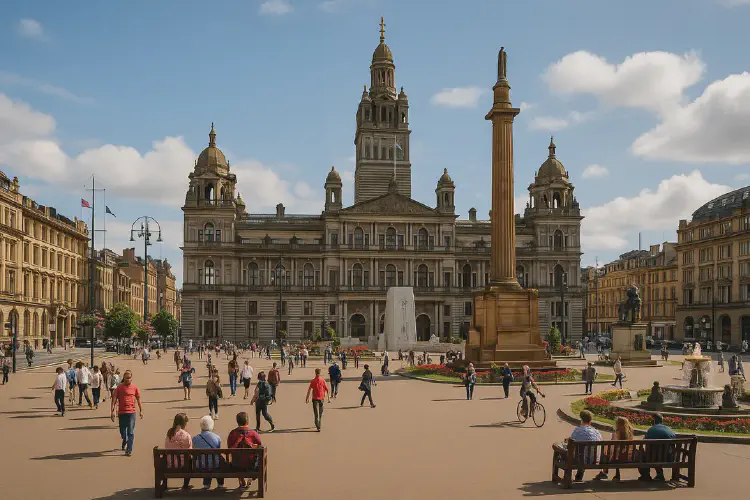
Glasgow, Scotland’s largest city, is known for its creativity, friendly spirit, and vibrant cultural life. Once an industrial powerhouse, today it shines as a hub for art, music, and architecture.
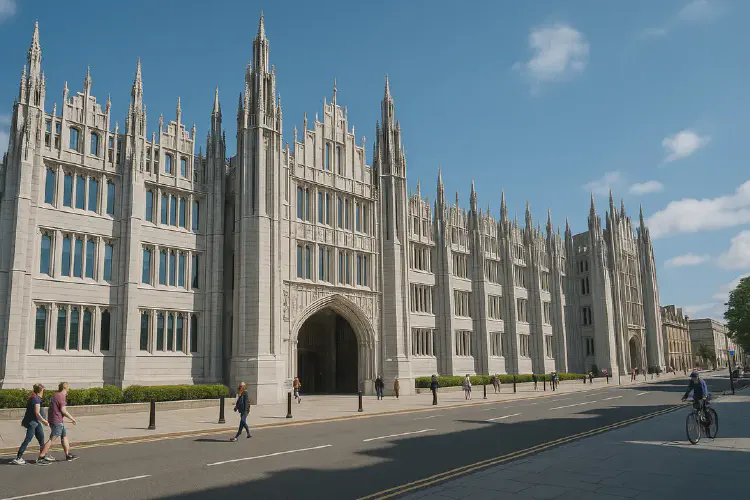
Known as the Granite City for its sparkling grey-stone buildings, Aberdeen blends history, industry, and coastal charm. It’s Scotland’s third-largest city and offers a unique mix of urban energy and seaside relaxation.
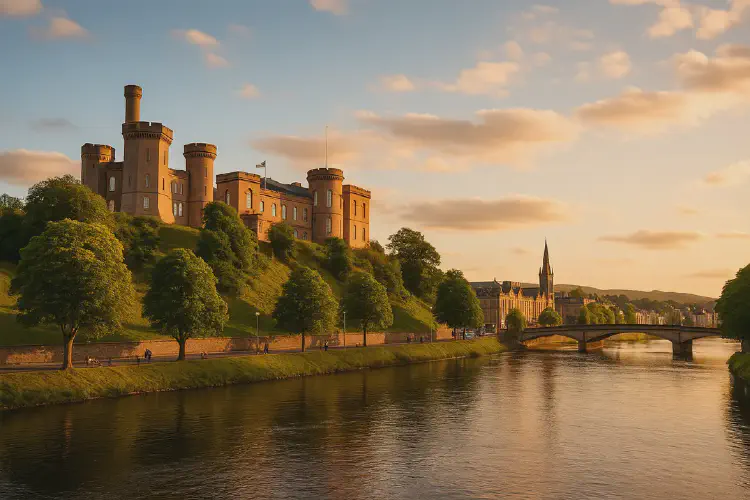
Inverness, often called the ‘Capital of the Highlands,’ is a compact city that serves as the perfect base for exploring Scotland’s wild north. With a mix of culture, history, and access to breathtaking landscapes, it’s the gateway to the Highlands.
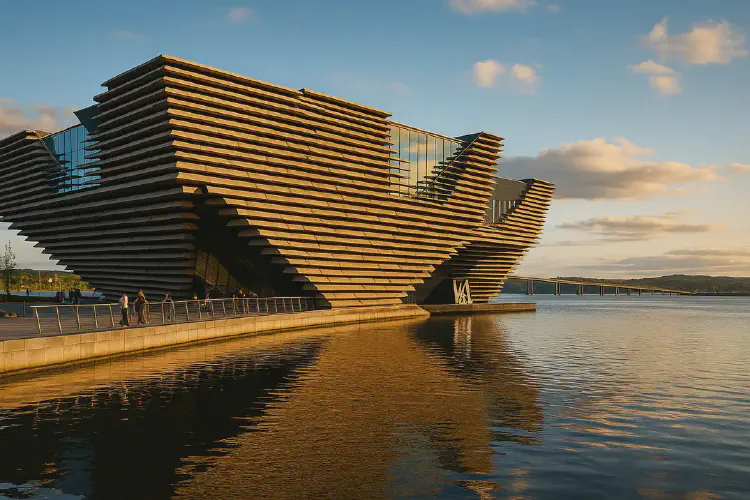
Once known mainly for industry, Dundee has reinvented itself as one of Scotland’s most creative cities. With a thriving cultural scene and striking waterfront, it’s now a magnet for art, design, and innovation.
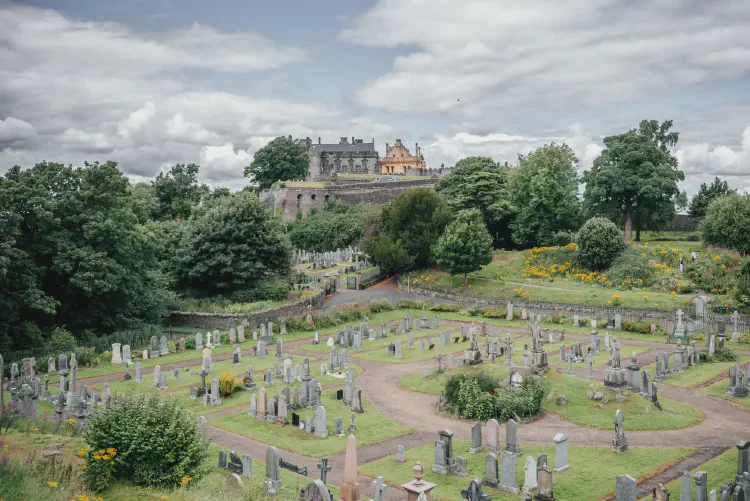
Stirling, often called the ‘Gateway to the Highlands,’ holds a special place in Scottish history. Its strategic location made it a battleground, a royal stronghold, and a symbol of national identity.