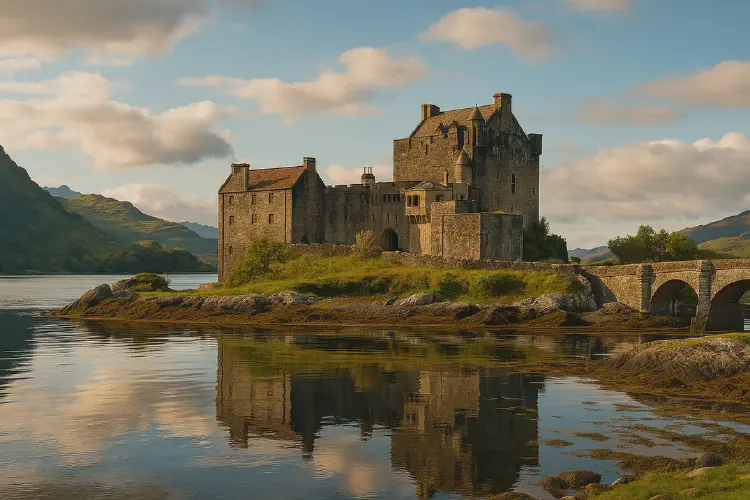
Eilean Donan Castle
Eilean Donan Castle is one of Scotland’s most photographed landmarks. Set on a tiny island where three lochs meet, it embodies the romance and drama of the Highlands.
Scotland has over 1,500 castles. That works out to roughly one for every 50 square kilometres, and it helps explain why the country feels so visibly layered with history. Each era kept finding new uses for the same defensible places: a volcanic crag that suited an Iron Age hillfort later suited a medieval royal palace; a loch-side promontory that gave a 13th-century garrison command over a Highland pass still draws visitors who want to understand what that command meant. The stone stays. The people and the politics around it keep changing.
The earliest layer goes deeper than any castle. Skara Brae on Orkney was inhabited from around 3100 BC, which means it was already ancient by the time the Pharaohs began building the Great Pyramids. It is a Neolithic village of nine stone houses, preserved under windblown sand for 4,500 years, with built-in stone beds, hearths, and dressers still in place. On Lewis, the Callanish Stones (construction of the central circle began around 2900 to 2600 BC) form a cross-shaped monument of standing megaliths around a chambered tomb, aligned to the movements of the moon. These two sites predate the Roman conquest of Britain by roughly three thousand years. They were already ancient legend when the first castles were being built.
The medieval castles came with particular urgency. Scotland’s Wars of Independence in the late 13th and early 14th centuries turned the country’s fortresses into sites of genuine national contest. Stirling Castle, on its volcanic plug guarding the crossing between Highlands and Lowlands, changed hands repeatedly during this period. The battles of Stirling Bridge (1297) and Bannockburn (1314) were fought within sight of its walls. Edinburgh Castle, on its own volcanic crag above the old town, was the seat of royal power: Mary Queen of Scots gave birth to the future James VI here, the Honours of Scotland (the Scottish Crown Jewels) were hidden within its walls during the Cromwellian occupation, and the castle has never fallen by direct assault.
The last great chapter played out across the Highlands. The Jacobite cause ran from the late 17th century through its end on Culloden Moor, near Inverness, on April 16, 1746. The battle lasted under an hour. What followed (the banning of Highland dress, the disarming of the clans, the beginning of the Clearances) reshaped the landscape that visitors walk through today. The Highland castles caught in that arc, including Eilean Donan (destroyed in the 1719 Rising and rebuilt stone by stone between 1912 and 1932), carry that history alongside their scenic drama.
All of these eras sit within a day’s drive of one another. A visit to Scotland’s historic sites is less a tour of monuments than a walk through compressed time, each layer still visible in the one before it.
Three sites that, between them, span the main eras:
Two castles on volcanic crags, 37 miles apart, between them spanning Scotland’s most contested centuries. Edinburgh Castle holds the Honours of Scotland and the Stone of Destiny, houses St. Margaret’s Chapel (12th century, the oldest surviving building in the city), and has fired the One O’Clock Gun daily since 1861. Stirling Castle was the seat of the Stuart monarchy through its most architecturally ambitious period: the Great Hall (1503, still the largest medieval banqueting hall in Scotland), the Royal Palace built for James V, and the royal chapel where James VI was baptised in 1594. Both castles changed hands in the Wars of Independence; both are still working landmarks today.
Full guides: Edinburgh Castle and Stirling Castle.
The Highlands placed their castles on loch shores, island outcrops, and clifftops above the sea. Eilean Donan, where Loch Duich, Loch Long and Loch Alsh converge near Dornie, was a Mackenzie and MacRae stronghold that was destroyed by government warships during the 1719 Jacobite Rising and lay as roofless ruins for nearly two centuries before Lt. Colonel John MacRae-Gilstrap rebuilt it completely (1912 to 1932). On Loch Ness, Urquhart Castle controlled movement through the Great Glen for 400 years of successive Scottish and English occupations, and its 16th-century Grant Tower is still standing above the loch. On the Caithness clifftops near Wick, Castle Sinclair Girnigoe (a detour off the North Coast 500) is still being excavated; recent digs have pushed its origins back at least a century earlier than previously thought, and the Sinclair family feuds attached to it are as dramatic as the cliff setting.
Full guides: Eilean Donan Castle, Urquhart Castle, and Castle Sinclair Girnigoe.
Scotland’s oldest surviving structures are not castles. Skara Brae was revealed by a winter storm in 1850 after lying under sand for 4,500 years: nine stone houses with stone dressers, beds, and hearths, connected by covered passageways, on Orkney’s exposed west coast. The Callanish Stones on Lewis are even earlier in origin: the main monument complex (Callanish I) features a long north-facing avenue, a central stone circle, and a chambered tomb added around 2500 BC, set within a wider landscape of at least 19 recognized Callanish sites. Both are UNESCO World Heritage components and free to visit (the Callanish Stones are open to the sky; Skara Brae has a small admission charge for the visitor centre).
Full guides: Skara Brae and The Callanish Stones.
Scotland’s two most visited battlefields are separated by 400 years and the full arc of the independence question. Bannockburn (1314) secured Robert the Bruce’s hold on Scotland and is marked today by a visitor centre outside Stirling with an immersive digital battle reconstruction. Culloden Moor (1746) is the quieter, more affecting of the two: the battlefield is preserved with clan grave-markers and flag posts showing where each regiment stood, and the NTS visitor centre does not shy away from what followed the battle. Both sites reward a second visit more than a first.
Full guide: Historic Battlefields: Culloden and Beyond.
Not every historic site in Scotland is a castle or a battlefield. Provand’s Lordship (1471) in central Glasgow is one of only four medieval buildings left in the city, originally part of St. Nicholas’s Hospital, now furnished with 17th-century period pieces and set in a small medicinal herb garden. It sits within walking distance of Glasgow Cathedral and the St. Mungo Museum of Religious Life and Art, making the cathedral quarter a concentrated half-day for anyone who wants the quieter, domestic side of Scotland’s past alongside the grander monuments.
Full guide: Provand’s Lordship.
Scotland’s historic buildings and monuments sit inside the landscapes that shaped them: Edinburgh and Stirling on their volcanic crags, Eilean Donan on a sea-loch island, Urquhart on the shore of Britain’s largest loch by volume, Skara Brae on a windswept Orcadian coast. The terrain that made these places defensible, sacred, or significant is part of the visit. Explore it at Scotland’s Natural Landscapes.
Most of the castle towns are also city starting points. Edinburgh for the Borders, Glasgow for Loch Lomond, Inverness for the Great Glen and the Far North, Stirling for the southern Highlands. See the city context at Scotland’s Cities.
And the landscapes these castles anchor are walking country: long-distance routes pass Highland fortresses, battlefield walks cover ground that changed the country’s direction, and island paths lead to prehistoric monuments with no crowds before 10am. More in Scotland’s Outdoor Activities.
Eilean Donan Castle is one of Scotland’s most photographed landmarks. Set on a tiny island where three lochs meet, it embodies the romance and drama of the Highlands.
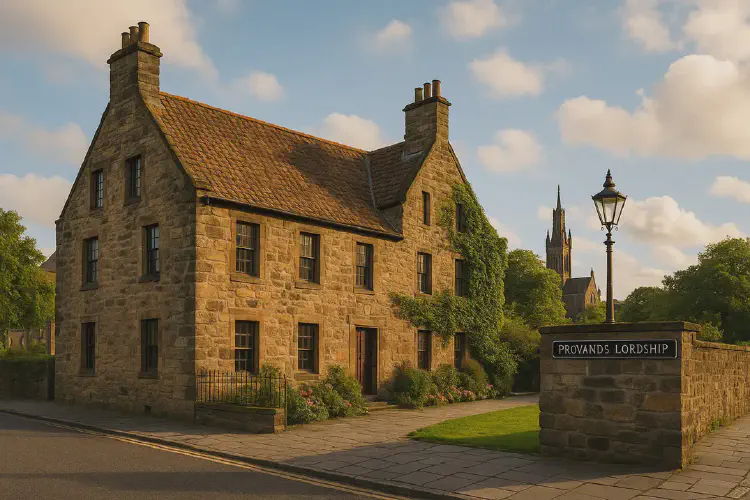
Tucked near Glasgow Cathedral, Provand’s Lordship is the city’s oldest surviving house. This rare medieval building offers a glimpse into Glasgow’s past, far removed from its later industrial boom.
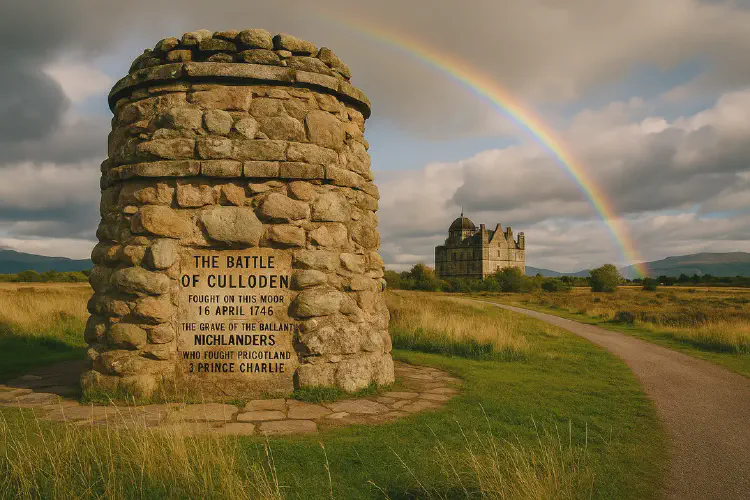
Scotland’s history is marked by battles that shaped its identity. Visiting historic battlefields such as Culloden offers a powerful way to connect with the nation’s past of struggle, resilience, and transformation.